 Drug
Market overview — where things landed in 2026
With Archetyp gone and a fresh wave of users still trickling in from Abacus, Incognito, Bohemia and Versus, DrugHub has quietly become the default landing spot for anyone who wants an active market without handing a hot wallet their life savings. Nothing fancy about it: the interface is functional rather than pretty, the codebase was written from scratch, and the previous life of the project is a 2020 merge of smaller code into what later became SuperMarket before it grew into this.
What the operator keeps pointing out in announcements — and what this whole site is about — is the operational surface. Registration demands working PGP knowledge before anyone gets an account. Messages must be encrypted; plaintext is structurally impossible, not just discouraged. Deposits do not exist. You check out an order, get a one-time XMR address and invoice amount, pay it, done. Withdrawals are processed offline inside roughly 24 hours, so there is no sitting balance for a seizure or breach to reach.
Numbers worth pinning
Nine of ten common tickets are answered by the automated support pages — measured by the staff at 99.5 % resolution rate. The market runs a proof-of-work gate on entry, which is why a slow shared VPS feels sluggish while a decent CPU sails through. Vendors get two private mirrors on acceptance; customers can request theirs via ticket. Browsing the storefront works with zero credentials at all.
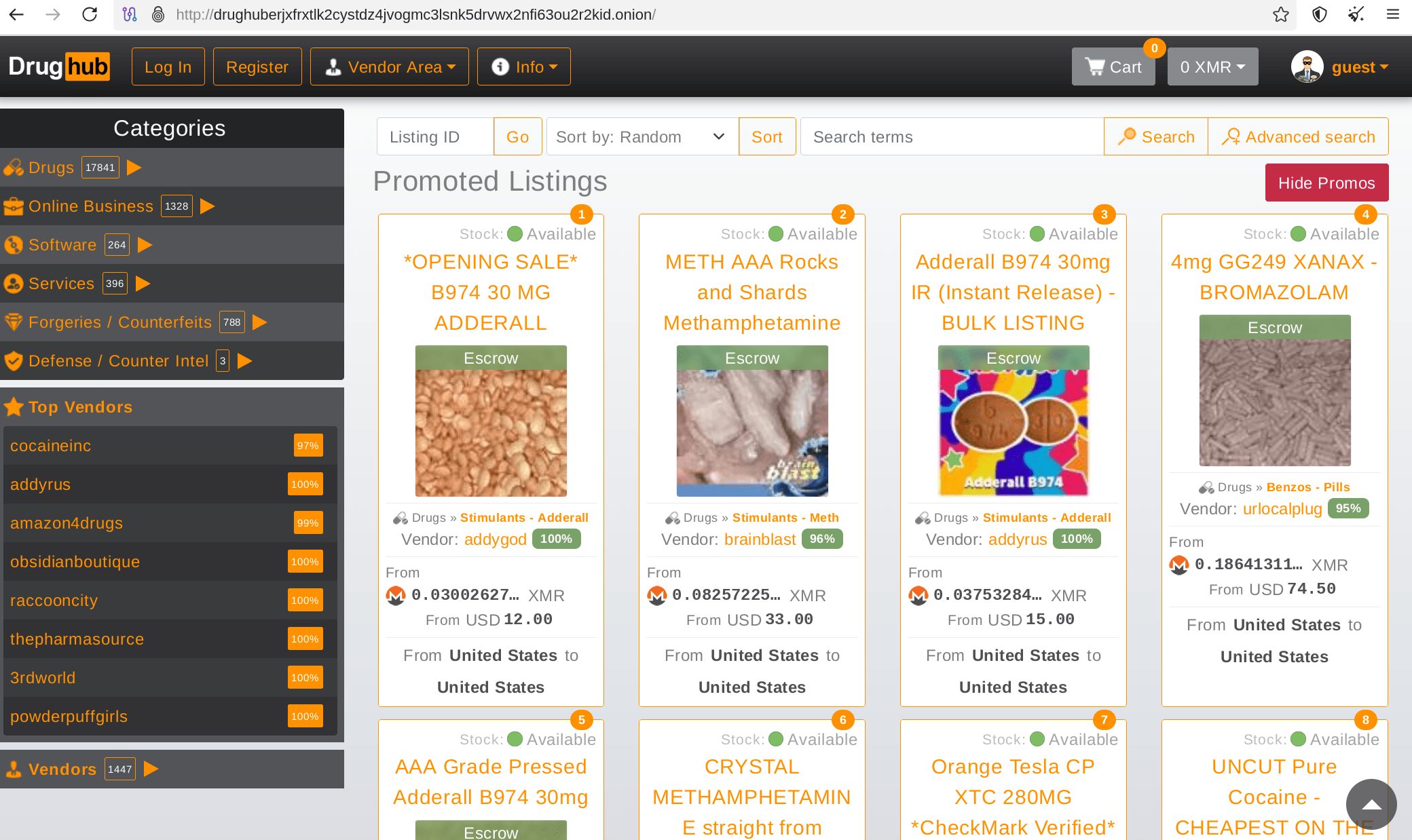
The vendor side is not an afterthought either: bulk quantities, quick replies with encrypted follow-ups, an autodeposit sweep for withdrawals, staff sub-accounts with restricted rights, listing quick-edit, keywords, fully private listings and a vendor-controlled finalise timer from five to forty-five days. If you are comparing markets as a vendor, start with the audited rows in the market review and skip past the brochure text elsewhere.
Full feature matrix — no marketing padding
Everything marked yes/no below is straight from the market specification file, not vibes. Where something is disputed (multi-sig, for example — asked about constantly, answered “not for the foreseeable future”), the dispute is noted in plain language.
| Feature | Status | Notes |
|---|---|---|
| Passwordless login (PGP) | YES | No username, no password; signature = session |
| Browsing without login | YES | Storefront fully open; account needed only for actions |
| Shopping cart | YES | Mixed-vendor carts, one invoice per checkout |
| End-to-end message encryption | ENFORCED | Plaintext impossible; quick replies excluded by rule |
| Proof-of-work entry puzzle | YES | Needs a decent CPU to solve quickly |
| Private unique mirrors | YES | 2 for vendors; account-bound; scrapers will get you banned |
| Customer deposits | NONE | Invoice-based; wallet used only for refunds/adjustments |
| Jabber notifications | YES | Private jabber server on the market side |
| Automated support | YES | 99.5 % issue resolution by pages |
| Dispute system | YES | “received order but will not release escrow” is a vendor tool too |
| Captchas beyond PoW | FEW/0 | The PoW gate does the heavy lifting |
| Multi-sig vault | NO | Official answer: not for the foreseeable future |
| Dread board support | NO | Tickets only; staff say so explicitly |
| Fentanyl & analogues | BANNED | Weapons, poisons and data dumps likewise |
Fee & payment model — who pays what
The commission is 5 % and it lands on the buyer, not carved out of vendor margins. Practically that means vendor listing prices mirror what they put on every other market, and you pay the fee on top at checkout. Some buyers complain about exactly that; the trade is a market that collects nothing unless a trade completes, with withdrawal network fees paid by the house.
Fee table
| Item | Rate / rule | Paid by |
|---|---|---|
| Order commission | 5 % | Customer |
| Withdrawal network fee | Covered | Market (offline processing, ~24 h) |
| Currency | XMR only | — |
| Deposit requirement | None | Per-order one-time invoice |
Payment walk-throughs, including how the invoice address behaves and which wallets actually cut mustard, are on the Monero / XMR invoice page. The FAQ entry on fees cross-references the same figures so searchers land somewhere consistent.
Security architecture — seizure, phishing, keys
Three properties drive everything else here. First, no password store: staff hold no credential table, so a DB leak leaks nothing usable. Second, forced PGP everywhere, meaning a seized box yields ciphertext and the admin literally cannot read your correspondence with a vendor — including the evidence in disputes. Third, unique onions: a DDoS against the main mirrors is noise, not an outage, for people holding their own link.
Auth comparison — PGP signature vs classic password
| Classic password market | DrugHub | |
|---|---|---|
| Stored credential on server | password hash table | none (pubkey only) |
| DB breach exposure | rainbow / offline attack | nothing reusable |
| 2FA | app/TOTP optional | key possession = enforced 2FA |
| Plaintext messages | possible | structurally impossible |
| Recovery path | email “forgot” | none — key is identity |
| Session proof | cookie/token | fresh PGP signature per login |
Two operational notes from the market data worth repeating because new users trip on them: accounts inactive for about six months are deleted without ceremony (community thread confirms ~6 months and “name/key not burned, just re-register”), and the staff line on backup recovery is flat-out “not even considering it”. Your key hygiene is your account. The step-by-step walkthrough of registration and sign-in, including the challenge/sign flow, is on the login portal page.
How to connect — Tor, puzzle, mirrors
The supported route is Tor Browser to the onion string above. Expect the proof-of-work solve on first hit; staff answer the slow-connection thread with one line — “we use PoW so you need a decent CPU to solve the puzzle”. If the main mirrors are eating attacks (they get attacked constantly per their own note), the private-mirror path keeps traffic moving.
- Client: current Tor Browser; see the Tor / Tails setup walkthrough for verification and profile guidance.
- Entry: copy the URL from the box above — one flipped character and it is someone else's mirror.
- Gear: a workstation with real CPU; Tails is fine, locked-down shared VMs are the exception.
- Mirrors: keep the private ones account-local; they are not shareable and aggressive scraping on one = ban, end of story.

Why an XMR-only market makes sense here
One currency simplifies the invoice flow to something a script can audit trivially: order value, plus fee, equals XMR, sent to a fresh address. Ring signatures plus stealth addresses mean the vendor side sees payment, not your exchange history, and the offline withdrawal path keeps market funds out of the blast radius entirely. Staff recommend the official Monero GUI or Feather in-thread — “if you don't control the private keys it's not your coin”, and closed-source / KYC wallets get vetoed by their own users in the same thread. More on invoice mechanics and wallets on the monero invoices page.
Explore the guides — one hop from here
In-depth feature audit, history and comparison tables.
Login portalPasswordless PGP registration & auth, step by step.
FAQFees, purge timer, mirrors, vendor bonds — answered.
Monero / XMRInvoice payments and zero-hot-wallet model explained.
Tor / TailsClient verification, puzzle behaviour, OpSec notes.